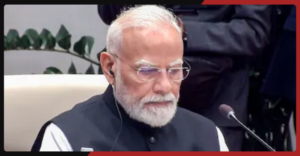
Modi to Advocate Digital Inclusion, Climate Equity at G7 Canada Summit

Prime Minister Narendra Modi is set to travel to Kananaskis, Alberta, this month to participate in the 2025 G7 Summit, marking another milestone in India’s growing global diplomatic engagement. Scheduled for June 15 to 17, the summit is being hosted by Canada, and Modi’s presence has been welcomed as a vital contribution to ongoing discussions around digital inclusion, climate equity, and global economic recovery.
The Group of Seven (G7) consists of seven of the world’s most economically developed nations—Canada, France, Germany, Italy, Japan, the United Kingdom, and the United States—along with the European Union. Though India is not a formal member, it has been invited regularly in recent years, reflecting its growing geopolitical importance and influence as the voice of the Global South.
Canadian Prime Minister Mark Carney extended the invitation to Modi earlier this year, saying, “India plays an indispensable role in global progress. From technology to clean energy to economic innovation, India is helping shape the future.”
At the summit, Prime Minister Modi is expected to speak on India’s core strengths: its pioneering work in digital public infrastructure, its model of sustainable development, and its leadership in inclusive innovation. These themes align closely with the summit’s focus on how democratic nations can jointly tackle issues like the AI revolution, green transitions, and global inequality.
One of India’s most significant contributions to the global policy space in recent years has been its success in leveraging technology for public good. Modi is likely to showcase India’s achievements in digital identity (Aadhaar), digital payments (UPI), and its CoWIN platform for vaccine distribution. These scalable models are being explored by many developing countries and could offer templates for global digital cooperation.
The G7 summit will also provide a platform for India to push for fairer outcomes in climate policy. India has repeatedly emphasized that developed nations must take the lead in providing climate finance and technology to support green transitions in the Global South. Modi will likely call for a just and equitable approach to climate action—where historical emitters take responsibility while also supporting emerging economies in their clean energy goals.
India has made significant progress in this area. With more than 170 gigawatts of installed renewable capacity, and ambitious plans for green hydrogen and solar energy, India is positioning itself as a leader in the global green transition. Modi may also use the summit to expand support for the International Solar Alliance—co-led by India—which now includes over 100 countries.
Security arrangements in Kananaskis are in full swing, with the mountainous terrain lending itself to a secure and secluded environment for frank diplomatic conversations. While formal negotiations will dominate the schedule, sideline interactions between leaders are expected to lead to new initiatives and partnerships.
Modi is also expected to hold key bilateral meetings, particularly with U.S. President Donald Trump, British PM Keir Starmer, and French President Emmanuel Macron. These meetings are likely to focus on collaboration in emerging technologies, defense partnerships, and regional security.
Analysts believe India’s inclusion is not just symbolic. “India represents the hopes and concerns of over a billion people—many of whom are underrepresented in elite global forums,” said Dr. Swati Deshmukh, a policy fellow at the Global Development Forum. “Modi’s presence ensures that conversations at the G7 reflect broader realities.”
As the world struggles with overlapping crises—from climate change to technological disruption—India’s experience with scalable, inclusive solutions will be of great interest to G7 nations. Whether it’s fintech for the unbanked, telemedicine for rural communities, or affordable green energy, India offers practical examples of innovation under constraint.
This year’s G7 summit could set the tone for a more collaborative and representative global governance model. With India taking the lead on digital inclusion and climate justice, Prime Minister Modi’s voice in Kananaskis may help shift the conversation from policy promises to action with impact.