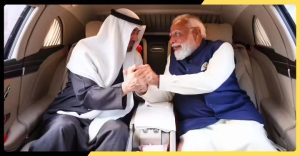
UAE President’s 3-Hour India Visit Highlights Deepening Strategic Ties as PM Modi Makes a Special Gesture

The brief yet symbolically powerful three-hour visit of the President of the United Arab Emirates to India underscored the growing depth and maturity of bilateral relations between the two nations. Though short in duration, the visit carried significant diplomatic weight, reinforced by Prime Minister Narendra Modi’s special personal gesture that reflected the close strategic partnership and mutual trust India and the UAE have cultivated over the past decade.
High-level diplomatic engagements are not always measured by their length, and this visit served as a prime example. Carefully curated meetings, targeted discussions, and ceremonial warmth defined the engagement, signaling continuity in political dialogue and a shared vision for regional and global cooperation. The UAE President’s decision to undertake a brief stopover in India itself highlighted the priority Abu Dhabi places on New Delhi as a strategic partner.
Prime Minister Modi’s special gesture—welcoming the UAE President personally and engaging in informal yet meaningful interaction—went beyond protocol. Such gestures, often rare in tightly scheduled diplomatic itineraries, reflect personal rapport between leaders and help elevate bilateral ties beyond transactional diplomacy. Observers noted that this warmth mirrors the evolution of India-UAE relations from a traditional trade-based partnership to a comprehensive strategic alliance.
Over the years, India and the UAE have strengthened cooperation across multiple sectors including energy, defense, food security, fintech, space, and renewable energy. The visit reaffirmed commitments to these areas while providing an opportunity to assess progress on ongoing initiatives. Both sides reiterated their intention to fast-track implementation rather than merely announcing new frameworks, an approach increasingly favored in modern diplomacy.
Economic collaboration remains a cornerstone of the relationship. The Comprehensive Economic Partnership Agreement (CEPA) has already transformed trade dynamics, lowering barriers and creating new investment opportunities. During the visit, leaders reviewed trade growth and explored ways to enhance supply chain resilience, encourage private-sector collaboration, and support startups and innovation ecosystems in both countries.
Energy security and sustainability featured prominently in discussions. As a major energy producer and a global hub for clean energy initiatives, the UAE plays a vital role in India’s energy strategy. Simultaneously, India’s expanding renewable energy sector and its leadership in climate initiatives align well with the UAE’s long-term sustainability goals. The visit reinforced joint commitments to clean energy transitions and climate action.
Defense and security cooperation also formed an important part of the dialogue. Both nations share concerns about regional stability, maritime security, and counterterrorism. Over the years, military exercises, intelligence sharing, and defense industry collaboration have grown steadily. The leaders emphasized the importance of continued coordination to ensure peace and stability in the Indian Ocean region and beyond.
Beyond strategic calculations, people-to-people ties remain the strongest pillar of India-UAE relations. With millions of Indians living and working in the UAE, the bilateral relationship has a unique human dimension. Prime Minister Modi’s gesture was widely interpreted as recognition of this bond and of the UAE leadership’s consistent efforts to ensure the welfare and dignity of the Indian diaspora.
Cultural and educational exchanges were also highlighted during the visit. India and the UAE have increasingly collaborated on preserving heritage, promoting cultural festivals, and fostering academic partnerships. These initiatives help create long-term goodwill and mutual understanding, ensuring that the relationship remains resilient across political and economic cycles.
The visit also carried broader geopolitical implications. In a world marked by shifting alliances and economic uncertainty, India and the UAE have positioned themselves as reliable, pragmatic partners focused on stability and growth. Their collaboration within multilateral platforms and regional groupings reflects a shared commitment to dialogue, inclusivity, and rules-based international order.
In conclusion, the UAE President’s three-hour visit to India, complemented by Prime Minister Modi’s special gesture, was far more than a ceremonial stop. It was a reaffirmation of trust, shared ambitions, and a forward-looking partnership. The brevity of the visit did not diminish its impact; instead, it highlighted the efficiency and confidence that define India-UAE relations today. As both nations look to the future, such engagements continue to lay the foundation for deeper cooperation and lasting friendship.